Why study the Graduate Certificate in Child and Family Health with UTS Online?
Top 100 University globally1
Australia’s leading young university2
Top 10 in Australia for graduate employability3
5-star rated for student retention4
1QS World University Rankings, 2027 2Times Higher Education Young University Rankings, 2026 3Times Higher Education Graduate Employability Rankings, 2026. 4Good Universities Guide, 2026
The early years shape what comes next
Supporting a child’s health means understanding more than growth milestones. Families are adjusting to parenthood, children are developing rapidly and health needs are shaped by relationships, community, culture and the wider circumstances around them. Strong child and family health practice means seeing that whole picture and knowing how to work alongside families through it.
The UTS Online Graduate Certificate in Child and Family Health builds specialist capability across child growth and development, family and community health and partnership-based care. Designed for registered nurses and midwives, the four-subject course also includes 120 hours of clinical placement, helping you connect evidence with practice and prepare for work across child, family and early parenting health settings.

This course is open to nurses and midwives across Australia. However, due to specific professional and legislative requirements in Victoria, it does not meet the criteria set by the Victorian Government. Applicants from Victoria who intend to practise as a Child and Family Health practitioner in Victoria are therefore advised not to apply.
You may wish to consider a related course, such as the Graduate Certificate in Women’s and Children’s Health, or explore our health courses.
Applicants with extenuating circumstances may be assessed on an individual basis.

Who is this course for?
The UTS Online Graduate Certificate in Child and Family Health is designed for registered nurses and midwives who want to build specialist capability to support children, parents and families through the early years.
Whether you’re looking to move into child and family health practice or strengthen your existing nursing or midwifery capability, the course can help you build greater confidence working with children, parents and caregivers.
This course may suit professionals looking to:
- Move into child and family health nursing or midwifery
- Build specialist knowledge of infant and early childhood growth and development
- Strengthen their ability to support parents and caregivers
- Develop partnership-based, evidence-informed and culturally responsive approaches to care
- Gain practical experience through 120 hours of clinical placement
Applicants must hold current Australian registration as a registered nurse or midwife and meet the relevant entry requirements.
See entry requirements under course information for more eligibility information.
What you will study
The UTS Online Graduate Certificate in Child and Family Health comprises four online subjects totalling 24 credit points, building specialist capability across child development, family and community health and clinical practice, with 120 hours of clinical placement incorporated across two subjects.
Complete all four subjects:
- Foundations of Child and Family Health (6CP)
- Growth and Development in the Younger Child (the first 1,000 days) (6CP)
Includes 40 hours of clinical placement* - Family and Community Health in Practice (6CP)
- Growth and Development in the Older Child (the preschool years) (6CP)
Includes 80 hours of clinical placement*
*Placement requirement details: Students will complete a total of 120 hours of in-person placement across two subjects. Placements may be completed full-time or part-time, subject to clinic approval, and in some cases, your current workplace may be eligible. Download a course guide or speak with a Student Enrolment Advisor to find out more.
CP = credit points. Subject descriptions and learning outcomes are available via the subject links on this page. Subject availability, sequencing and course structures are subject to change.

Flexible course options
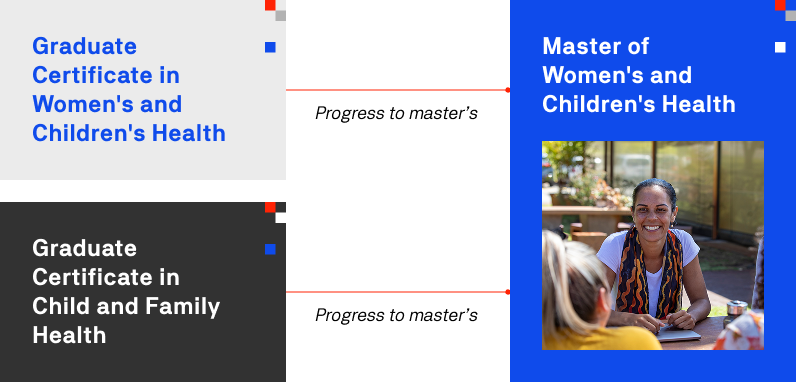
Whether you’re ready to take the next step or prefer to start with a shorter qualification, begin with the Graduate Certificate in Women's and Children's Health or Graduate Certificate in Child and Family Health and continue into the Master of Women’s and Children’s Health when you’re ready.
Learning outcomes
The UTS Online Graduate Certificate in Child and Family Health gives you the specialist capability to support children and families through the early years, apply evidence in practice and provide equitable, culturally responsive care across child and family health settings.
Apply evidence to strengthen clinical practice
Critically apply theory and evidence to your practice, while working within professional standards to support clinical excellence and stronger health outcomes for children and families.
Collaborate, lead and communicate effectively
Strengthen your ability to communicate respectfully, collaborate with others and contribute to leadership and innovation across diverse healthcare situations and settings.
Promote equitable and accountable care
Apply principles of social justice, professional accountability and equitable access to healthcare to support responsive care for children, families and communities.
Strengthen your cultural capability
Critically reflect on Indigenous Australian contexts to strengthen your professional cultural capability and your ability to work effectively with and for Indigenous Australians in health and social care.
Career outcomes
The UTS Online Graduate Certificate in Child and Family Health builds specialist capability relevant across community health, early childhood health, parenting support and family health services.
Depending on your professional background, registration and experience, graduates may explore opportunities such as:
- Child and Family Health Nurse
- Child Health Nurse
- Community Child and Family Health Nurse
- Early Childhood Health Nurse
- Early Parenting Support Practitioner

Course information
Applicants must have one of the following:
- Completed Australian bachelor's degree or higher qualification, or overseas equivalent, in Nursing or Midwifery AND Current registration as a registered nurse or midwife in Australia (AHPRA)
OR
- Current registration as a registered nurse or midwife in Australia (AHPRA)
Supporting documentation to be submitted with the application
For applicants who need to demonstrate professional work experience:
- Curriculum Vitae
This course is open to nurses and midwives from across Australia. However, due to the specific professional and legislative requirements in Victoria, this course does not meet the criteria set out by the Victorian Government. Therefore, applicants from Victoria who wish to practice as a Child and Family Health practitioner in Victoria are advised not to apply. However, you may want to consider our other related courses, such as the Graduate Certificate in Women’s and Children’s Health, which may better suit your goals, or browse options on our health courses.
Applicants with extenuating circumstances may be assessed on an individual basis.
Eligibility for admission does not guarantee offer of a place.
Want to check your eligibility?
Not only do we have the right tools and support teams to help you – we have people who care about your success.

$105K
Average salary
Graduates of the Graduate Certificate in Child and Family Health can expect an average annual salary of $105,000, based on roles such as Child and Family Health Nurse, Early Childhood Health Support Coordinator and Parenting Support Specialist.
(Talent)
26%
Growth in nursing and midwifery workforce
The nursing and midwifery workforce in Australia grew by 26% between 2013 and 2022, reflecting rising demand in women’s and children’s health.
(AIHW)
15%
of Australia's workforce in health care and social assistance
Health Care and Social Assistance employs 15% of Australia’s workforce, highlighting its critical role in the national employment landscape.
(Australian Bureau of Statistics)
Upcoming intakes
The UTS Online Graduate Certificate in Child and Family Health has 3 intakes per year. The diagram below shows all upcoming intakes, with the next intake highlighted below.
-
Mar
2027 -
Jul
2027 -
Oct
2027
Meet our faculty
Associate Professor Vanessa Scarf
Director of Postgraduate Midwifery Studies
Associate Professor Vanessa Scarf is Midwifery Director, Postgraduate Studies at UTS. A midwifery academic and researcher, her work focuses on maternity care, birthplace decision-making and the experiences of women and families. Her research spans the costs, outcomes and accessibility of different models of maternity care, including international work exploring midwife-led birthing centres and policies that reduce financial barriers to childbirth.

Rachel Reid
Course Coordinator, Graduate Certificate in Child and Family Health
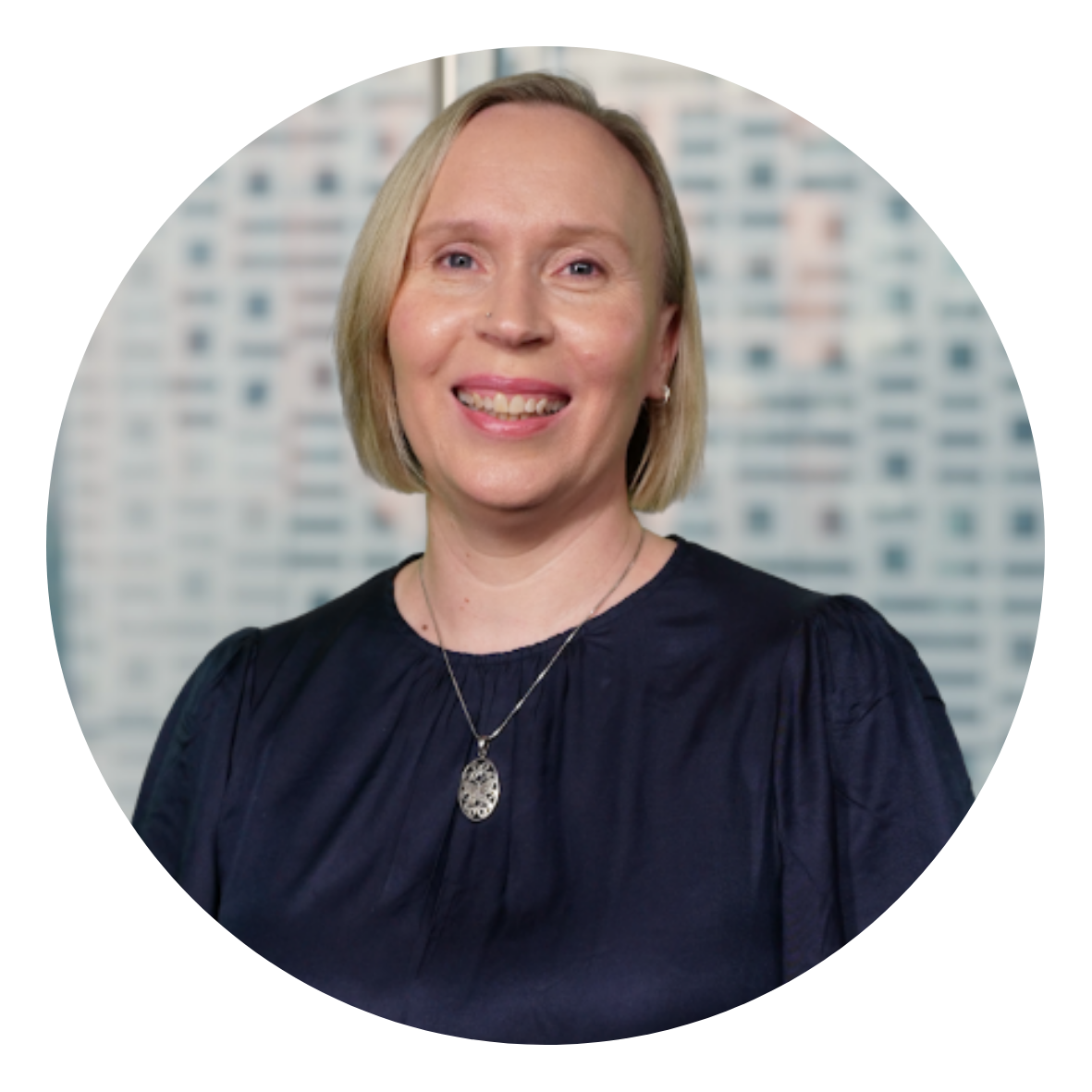
Rachel Reid is a registered nurse and midwife with experience across nursing, midwifery, perinatal research, antenatal education and child and family health. As Course Coordinator for the Graduate Certificate in Child and Family Health, she brings professional and academic experience into the course while working with industry partners to support relevant, high-quality learning for students.
Download a course guide
Download a course guide to explore detailed subject descriptions, entry requirements, pathway options and fee information.

“I thought completing one subject at a time would be much easier for me to juggle with my work. Everything was in one place. The broad coverage of what I studied has been really helpful, because I’m opening my progression up to those new paths.”
Audrey B, UTS Online Graduate

“I continued some friendships from fellow students and also continued the relationship with UTS.”
Ben G, UTS Online Graduate
Frequently asked questions
A Graduate Certificate in Child and Family Health is a postgraduate qualification designed to build specialist capability in supporting the health and wellbeing of children and families.
The UTS Online Graduate Certificate in Child and Family Health focuses on child development, family-centred care, community health practice and evidence-informed support for parents and caregivers.
The UTS Online Graduate Certificate in Child and Family Health is designed for registered nurses and midwives who want to move into, or strengthen their capability in, child and family health practice.
It can suit professionals who want to support children, parents and caregivers in community-based family health settings while building specialist knowledge in child development, family health and early childhood care.
Current entry pathways require applicants to be registered as a nurse or midwife with the Australian Health Practitioner Regulation Agency (AHPRA).
You must also meet one of the following:
• hold an Australian bachelor’s degree or higher qualification, or overseas equivalent, in Nursing or Midwifery; or
• have at least two years of full-time, or equivalent part-time, relevant post-registration clinical experience and demonstrate capacity to undertake tertiary study through previous hospital, college, professional or staff-development qualifications.
Eligibility for admission does not guarantee an offer of a place.
Yes. Current entry requirements require applicants to hold current AHPRA registration as a registered nurse or midwife.
This reflects the clinical focus of the course and its required child and family health placement experience.
The course is open to nurses and midwives from across Australia, but current UTS Online information advises that it does not meet the Victorian Government requirements for practice as a Child and Family Health practitioner in Victoria.
For that reason, Victorian applicants who intend to practise in Child and Family Health in Victoria are currently advised not to apply. UTS recommends considering related options such as the Graduate Certificate in Women’s and Children’s Health instead.
You’ll build specialist capability in child development, family-centred care, community health practice, evidence-informed clinical decision-making and supporting parents and caregivers.
The course also develops your ability to communicate and collaborate across healthcare settings, apply principles of equity and professional accountability, and strengthen culturally responsive practice when working with and for Indigenous Australians.
The UTS Online Graduate Certificate in Child and Family Health comprises four core subjects totalling 24 credit points:
• Foundations of Child and Family Health
• Family and Community Health in Practice
• Growth and Development in the Younger Child (first 1,000 days)
• Growth and Development in the Older Child (the preschool years)
The two growth and development subjects include the course’s required clinical placement hours.
The UTS Online Graduate Certificate in Child and Family Health can be completed in approximately eight to 10 months, including clinical placement requirements.
The course comprises four subjects totalling 24 credit points and includes 120 hours of in-person clinical placement across two subjects. Clinical placement requirements and individual study plans may affect the completion time.
Yes. Clinical placement is a required part of the course.
You must complete 120 hours of in-person clinical placement across the two growth and development subjects. Placements must meet UTS compliance, supervision and assessment requirements.
You’ll complete 120 clinical placement hours in total:
• Growth and Development in the Younger Child (the first 1,000 days): 40 hours
• Growth and Development in the Older Child (the preschool years): 80 hours
UTS recommends discussing placement planning with the clinical placement team early so the requirements can be coordinated with your study and professional commitments.
Clinical placements are arranged in settings such as Tresillian Centres and Child and Family Health Centres.
The exact placement location depends on course requirements, available facilities and arrangements coordinated by UTS with you and the placement provider.
Yes, you may request to complete placement at your current workplace if you are already working in Child and Family Health and the setting meets course requirements.
You will still need to complete the required student compliance processes, and your practice must be appropriately supervised and assessed using the Clinical Placement Assessment Tool (CPAT).
Not necessarily. Current UTS Online guidance says completing placement in more than one setting is recommended rather than mandatory.
Where possible, undertaking at least one placement outside your current workplace can broaden your clinical experience and expose you to different child and family health practice settings.
Yes. Current UTS Online information states that placement can be completed either full-time or part-time.
If you want to complete placement part-time, you should notify the UTS Clinical Practice Unit so approval and placement arrangements can be coordinated.
The UTS Clinical Practice Unit manages placement organisation and acts as the main point of contact between students, placement facilities and facilitators.
You are responsible for completing and submitting the required compliance documentation, while the Clinical Practice Unit works with you and the facility to coordinate an appropriate placement.
During placement, your subject coordinator and clinical facilitators oversee your progress and provide support throughout the clinical experience.
The UTS Clinical Practice Unit also supports the placement process by coordinating arrangements between you and the placement facility.
Yes. The coursework is delivered online and is designed to support nurses and midwives balancing study with professional and personal commitments.
However, the course also requires 120 hours of in-person clinical placement, so you will need to plan around both your weekly online study requirements and your placement schedule.
Yes. The Graduate Certificate in Child and Family Health can provide a pathway into the UTS Online Master of Women’s and Children’s Health, with eligible completed study receiving credit towards the master’s subject to current UTS articulation and credit rules.
The master’s builds on the foundation developed in the Graduate Certificate, helping you extend your expertise beyond child and family practice into women’s health, public health, leadership, research and evidence-informed care. For health professionals passionate about continuity of care, it provides an opportunity to develop a broader understanding of the factors shaping outcomes for women, children and families.
You can tailor your studies through a major in Health Research, Reproductive Health or Leadership and Management in Health Care, or create a flexible pathway by selecting approved subjects across these areas.
Designed for working health professionals, the course allows you to deepen your expertise and apply what you learn while balancing your existing professional and personal commitments.
The Graduate Certificate in Child and Family Health is specifically designed for registered nurses and midwives and focuses on child development, family-centred care and community-based child and family health practice. It includes 120 hours of in-person clinical placement.
The Graduate Certificate in Women’s and Children’s Health has a broader focus across women’s health, children’s health, sexual and reproductive health, and legal and ethical issues. It is open to eligible nurses, midwives and allied health professionals and does not include the same required clinical placement component.
You may be eligible to apply for Recognition of Prior Learning, or RPL, if your previous study or employment experience meets the relevant UTS course requirements.
UTS assesses RPL after an offer of enrolment has been accepted. The amount of credit available depends on your individual circumstances and the evidence provided.
The Graduate Certificate in Child and Family Health builds specialist capability for child and family health practice, subject to professional registration and jurisdictional requirements.
Career directions identified by UTS Online include:
• Child and Family Health Nurse
• Community Health Officer in child and family services
• Early Childhood Health Support Coordinator
• Parenting Support Specialist
Your eligibility for particular roles will depend on your existing professional registration, experience and the requirements that apply in your state or territory.
The current indicative tuition fee for the UTS Online Graduate Certificate in Child and Family Health is $14,340 in total, with an indicative fee of $3,585 per subject.
Fees are indicative and subject to change. Your total course fee may vary depending on your study plan, Recognition of Prior Learning and the fees applicable at the time of enrolment, so refer to the UTS Online fees page for the latest information.
Yes. FEE-HELP is available to eligible students studying the UTS Online Graduate Certificate in Child and Family Health.
FEE-HELP is an Australian Government loan scheme that can help eligible full-fee-paying students cover some or all of their tuition fees.
Eligibility requirements apply, so check the current FEE-HELP information before enrolling.
The 2027 course guide lists three intakes for the UTS Online Graduate Certificate in Child and Family Health: March, July and October.
Intake dates can change, so refer to the course page for the next available intake and current application dates.
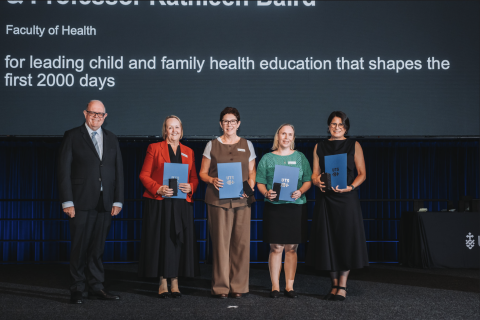
Yes. The UTS Online Graduate Certificate in Child and Family Health is taught by a team recognised for excellence in teaching, curriculum design and student learning.
Course Coordinator Rachel Reid, Associate Professor Vanessa Scarf, Professor Jennifer Fenwick and Professor Kathleen Baird received the Team Teaching Award at the 2026 UTS Vice-Chancellor’s Learning and Teaching Awards. Judged against the Australian Awards for University Teaching (AAUT) framework, the award recognises the team’s contribution to high-quality curriculum design, learning experiences and educational impact.
Together, the teaching team brings extensive academic, research and clinical experience in child and family health, connecting contemporary evidence with the realities of professional practice.
For more information about the award and the educators behind the course, read our article on UTS educators recognised for excellence in child and family health teaching.
For a standard six-credit-point UTS Online subject, you should typically allow around 15–20 hours per week for study.
This can include working through weekly learning materials, completing readings and activities, participating in online discussions and preparing assessments. Your actual study time may vary depending on the subject, your previous experience and assessment deadlines.
UTS Online students generally study one subject at a time, helping you focus your study around your professional and personal commitments.
For more information, read our guide to study resources with an example study schedule.
Assessment in the UTS Online Graduate Certificate in Child and Family Health varies by subject and is designed to reflect practical child and family health practice.
Depending on the subject, assessments may include clinical reports, posters, online quizzes, oral assessments, podcasts, recorded presentations, education tools, proposals, protocols and professional portfolios. Current course information states that there are no exams or group assignments required to graduate.
Clinical placement performance is also supervised and assessed as part of the placement subjects. Refer to the individual subject information in the UTS Handbook for current details.
The academic components of the UTS Online Graduate Certificate in Child and Family Health are delivered online through Canvas, with students working through structured weekly modules, practical activities, multimedia learning, peer discussions and assessments focused on child and family health practice.
The course also includes 120 hours of required in-person clinical placement, giving you supervised experience in child and family health settings.
Throughout the course, you’ll have access to support including:
• A dedicated Student Success Advisor
• Academic and assignment support
• Your subject coordinator and clinical facilitators during placement
• The UTS Clinical Practice Unit for placement coordination
• UTS Career Hub resources and networking opportunities
• Confidential health and wellbeing services
Here’s a video example showcasing key features of our online learning platform, including tools designed to enhance your study experience.
Or read our tips for balancing postgraduate study with work and life: https://studyonline.uts.edu.au/blog/balancing-postgraduate-study-and-life-commitments-practical-tips-success
Related courses

Related Articles
How to become a Midwifery Unit Manager in Australia
September 29th, 2026 Learn what a Midwifery Unit Manager does, the experience and leadership capability the role requires, salary considerations… Read More
Top jobs in women’s health: 8 careers to consider
September 17th, 2026 A career in women's health is fulfilling and rewarding, with growing job prospects in this field. Here are the top jobs… Read More