What does a health services manager do?

Australia’s healthcare system is complex. Behind the delivery of care are professionals making decisions about people, resources, quality, safety and how services can better respond to the needs of patients and communities.
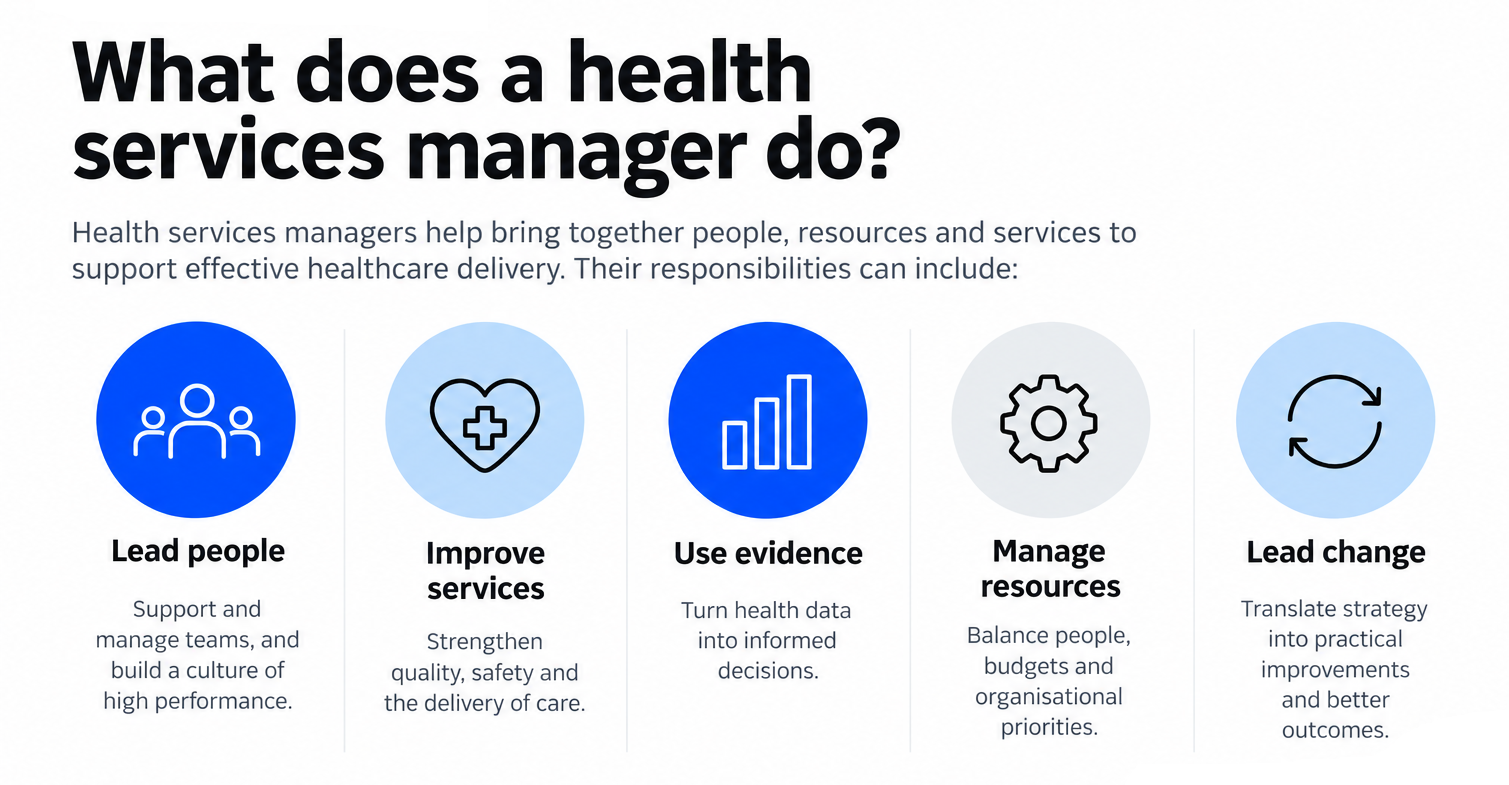
Health services managers help bring these moving parts together. Depending on the role and setting, they may lead teams, manage clinical services and health programs, oversee budgets and resources, contribute to planning and support improvements in the quality and delivery of care. Jobs and Skills Australia (JSA) identifies these responsibilities across the broader Health and Welfare Services Managers occupation group.¹
For health professionals looking to move into management, or those already taking on greater leadership responsibilities, understanding the role can help you identify the skills and experience needed to take your next step.
What is a health services manager?
A health services manager helps oversee the planning, coordination and delivery of health and social care services.
Depending on the organisation and level of seniority, their responsibilities can span people and teams, clinical services, programs, budgets, resources and organisational operations.
In Australia, JSA's Health and Welfare Services Managers classification includes occupations such as Medical Administrators, Nursing Clinical Directors, Primary Health Organisation Managers and Other Health and Welfare Services Managers.¹
A health services manager helps bring together people, resources and services to support effective healthcare delivery.¹
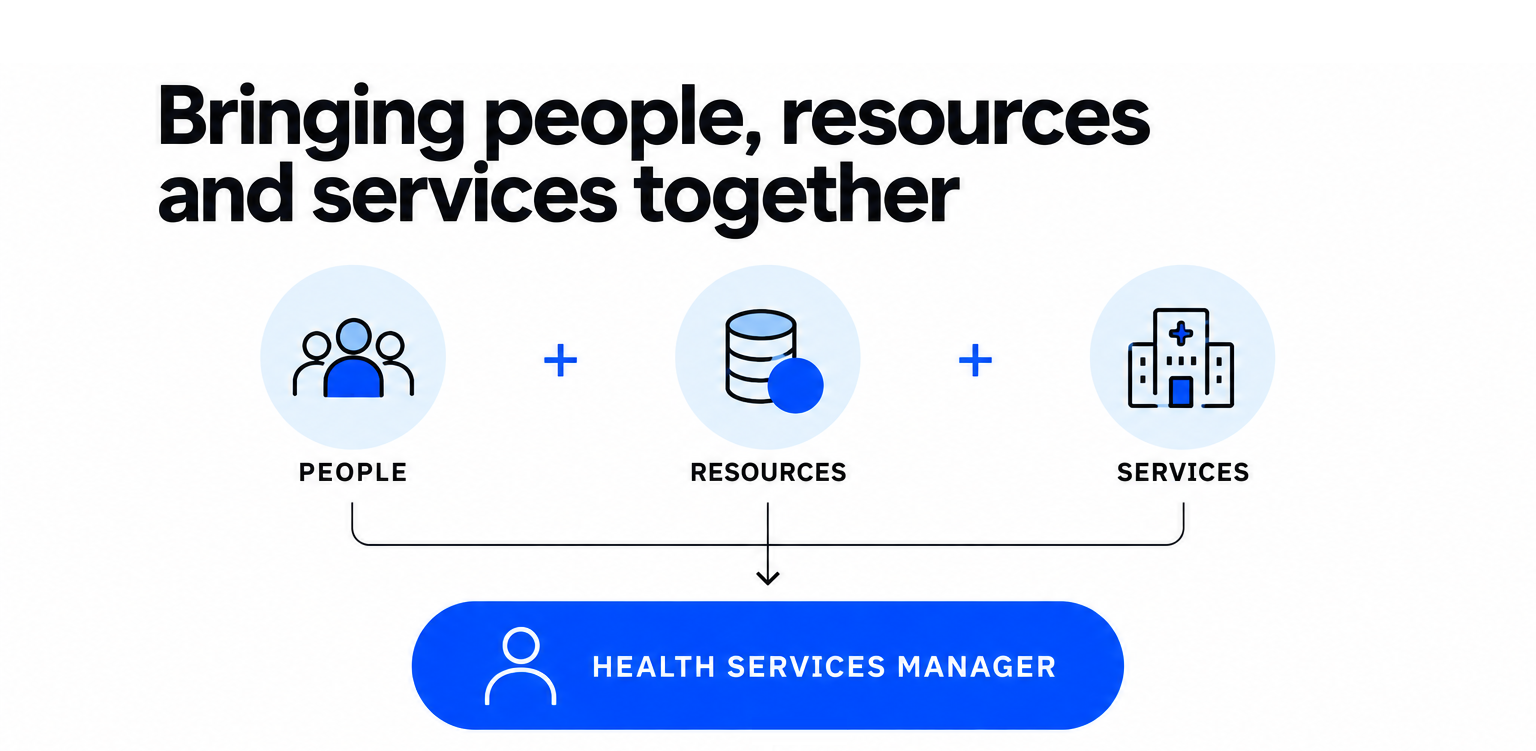
In practice, this can mean leading teams, managing budgets and resources, coordinating programs and clinical services, monitoring performance and working with healthcare providers, funding bodies and other stakeholders.¹
What does a health services manager do day to day?
There is no single job description for a health services manager. Responsibilities vary depending on the organisation, area of healthcare and level of seniority.
Common responsibilities can include:
- providing direction and management for health services, facilities or organisations
- coordinating health programs and clinical services
- monitoring and evaluating resources
- overseeing administrative operations, including budgets and reporting
- liaising with healthcare providers, boards and funding bodies
- representing organisations in negotiations, forums and other professional settings
- supporting staff selection, training and supervision.¹
These responsibilities mean health services managers need more than management knowledge alone. They need to understand how people, evidence, resources and organisational priorities come together within complex health and social care environments.
What skills does a health services manager need?
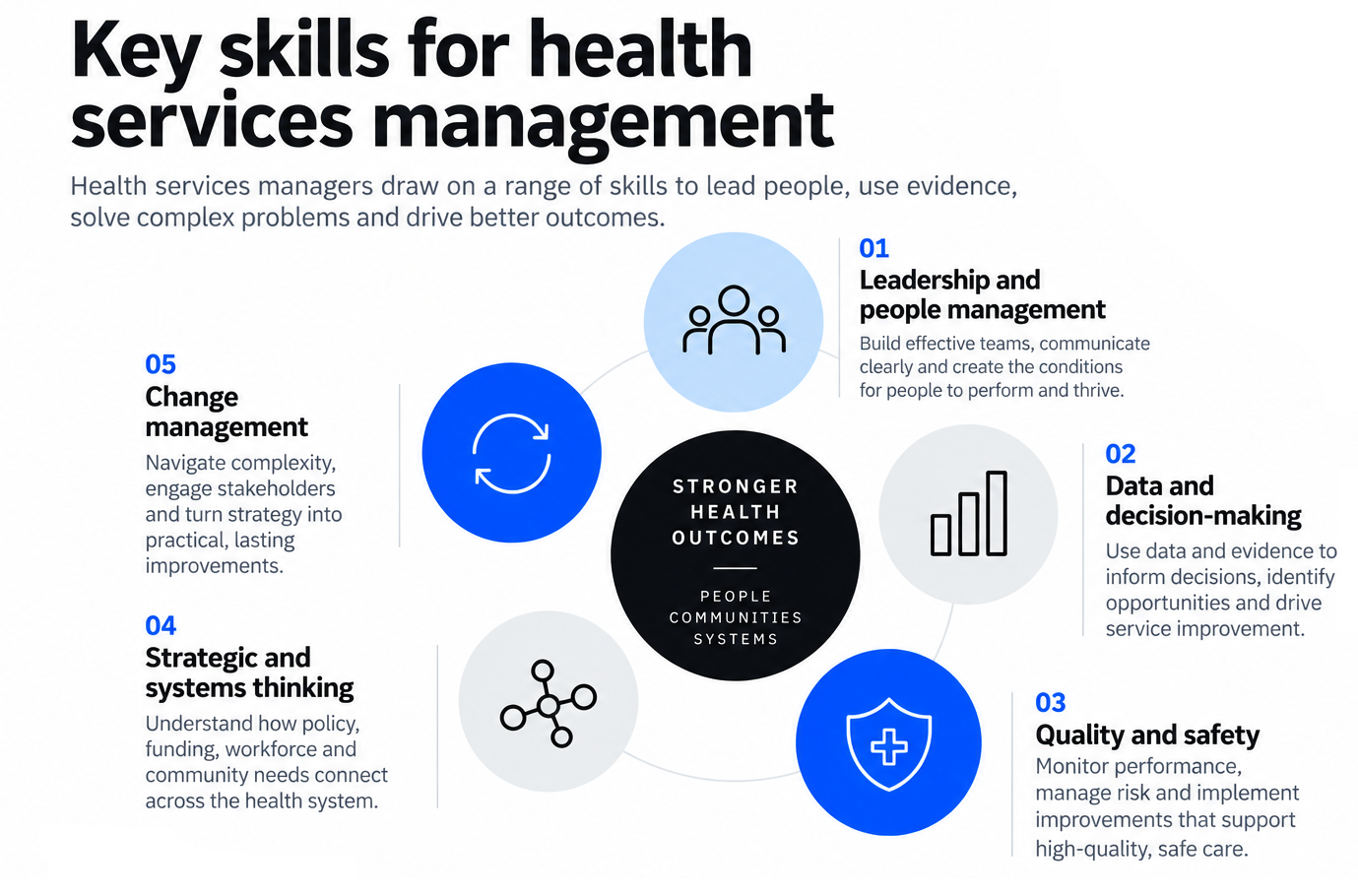
Effective health services management requires a combination of people, analytical and organisational capability. While the skills needed will vary between roles, there are several areas that can be particularly important.
Leadership and people management
Healthcare brings together people from different disciplines, professions and areas of expertise.
Health services managers need to communicate effectively, support teams, navigate competing priorities and create the conditions for people to work well together. Leadership can also involve guiding teams through uncertainty and change while balancing organisational priorities with the needs of patients, staff and communities.
Data and decision-making
Healthcare organisations generate significant amounts of information. Managers need to understand how data and evidence can inform decisions about services, resources, performance and improvement.
This doesn't necessarily mean becoming a data analyst. It means developing the ability to interpret information, ask the right questions and use evidence to support better decisions.
This capability is reflected in the UTS Online Master of Health Services Management, where Using Health Care Data for Decision Making forms part of the core course structure.²
Quality and safety
Quality and safety are fundamental to healthcare delivery.
Health services managers may contribute to monitoring performance, evaluating services, managing risk and implementing improvements that support high-quality care.
At UTS Online, Improving Safety and Quality in Healthcare is a core subject in the Master of Health Services Management, with further specialised study available through the Quality and Safety major.²
Strategic and systems thinking
A health service does not operate in isolation. Decisions can be influenced by policy, funding, workforce pressures, technology, organisational priorities and changing community needs.
Health services managers therefore need to look beyond individual challenges and understand how different parts of the health system interact. This broader perspective can help managers anticipate the consequences of decisions and identify opportunities for improvement.
Change management
Healthcare continues to respond to changing models of care, emerging technology, workforce pressures and evolving patient and community needs.
Health services managers may need to evaluate potential changes, work with different stakeholders and translate plans into practical improvements.
The ability to implement and evaluate change is also reflected in the current UTS Online Master of Health Services Management, including subjects such as Implementing and Evaluating Change within several majors.²
Where do health services managers work?
Health services management capability can be applied across a range of health and social care environments.
JSA identifies Health Care and Social Assistance and Public Administration and Safety among the industries employing Other Health and Welfare Services Managers.¹
Depending on their professional background and experience, health services managers may work across:
- hospitals and health services
- primary and community healthcare
- government health services
- aged and residential care
- allied health services
- private healthcare organisations
- health programs and services
- consulting and advisory environments.
Some roles remain closely connected to clinical services, while others focus more heavily on operations, strategy, policy, quality and safety, digital health or broader organisational leadership.
Career opportunities in health services management
Health services management can open opportunities across operational, strategic, clinical and organisational management.
Potential career outcomes identified for graduates of the UTS Online Master of Health Services Management include:²
- Health Services Manager
- Clinical Operations Manager
- Policy and Planning Officer
- Quality and Safety Manager
- Health Program Director
- Healthcare Consultant.
Career opportunities and eligibility for individual positions will depend on your professional background, experience, qualifications and the requirements of individual employers.
What qualifications do health services managers have?
There is no single qualification or pathway into health services management, with professionals coming from a range of clinical, health and management backgrounds.
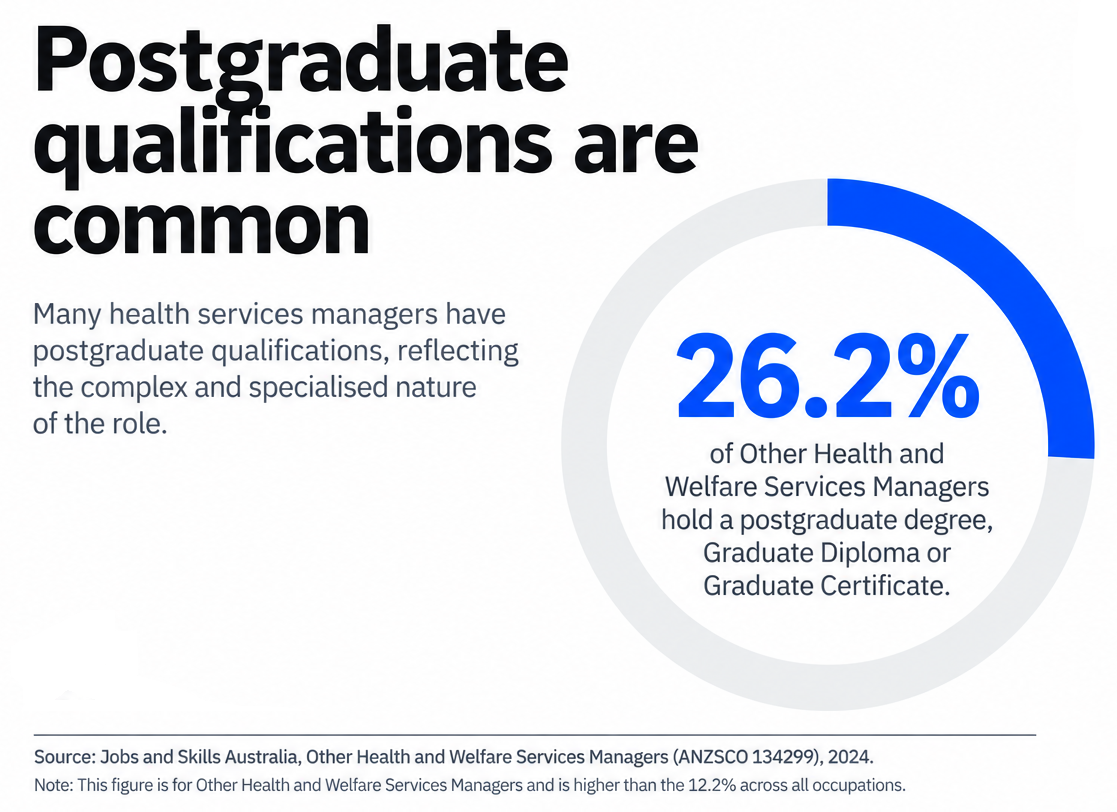
However, postgraduate education is common within the occupation. JSA reports that 26.2% of Other Health and Welfare Services Managers hold a postgraduate degree, Graduate Diploma or Graduate Certificate, compared with 12.2% across all occupations. A further 33.5% hold a bachelor's degree.¹
How do you become a health services manager in Australia?
There is no single pathway into health services management.
Professionals may move into the field from nursing, allied health, public health, health administration, policy, operations, management and other health and social care backgrounds.
For some, progression begins through professional experience and increasing responsibility. Others may use postgraduate study to develop capability beyond their existing area of expertise.
Depending on the role you're working towards, useful areas of development can include:
- leadership and organisational management
- health systems
- healthcare data and decision-making
- quality and safety
- health economics
- strategic planning
- policy
- change management.
Importantly, the requirements of health services management roles vary between organisations. Professional experience, qualifications and any specific registration or eligibility requirements should be considered for the individual role you're pursuing.
How can postgraduate study prepare you for health services management?
For professionals seeking to build more advanced capability, postgraduate study provides an opportunity to explore the challenges of managing health and social care services while continuing to develop professionally.
The UTS Online Master of Health Services Management comprises 12 subjects (72 credit points) and develops capability across areas including healthcare systems, data-informed decision-making, organisational management, quality and safety, leadership and value-based care.²
Students can deepen their expertise through six specialisations:
- Quality and Safety
- Digital Health and Analytics
- Leadership
- Business Administration
- Decision Making for Health Leaders
- Flexible major.²
This flexibility allows you to develop broader health services management capability while focusing part of your studies around your professional interests and goals.
Start with a Graduate Certificate
If you're looking for a shorter postgraduate option, the UTS Online Graduate Certificate in Health Services Management provides a focused introduction to health services management.
Across four subjects (24 credit points), you'll explore:
- Foundations of Healthcare Systems
- Using Health Care Data for Decision Making
- Organisational Management in Health Care
- Improving Safety and Quality in Healthcare.³
After completing the Graduate Certificate, you may be eligible to receive credit towards the Master of Health Services Management, giving you a clear pathway into the full postgraduate qualification with only eight additional subjects required.² ³
Take the next step in health services management
Health services managers play an important role in bringing together people, evidence, resources and organisational priorities to support effective healthcare delivery.
Whether you're already taking on management responsibilities or considering your next career move, strengthening your capability across leadership, health systems, data-informed decision-making, quality and safety, and organisational management can help prepare you for the complexity of health services management.
Explore the UTS Online Master of Health Services Management or Graduate Certificate in Health Services Management to find the study option that aligns with your experience and professional goals.
Frequently asked questions
A health services manager helps plan, coordinate and manage health and social care services. Responsibilities can include leading staff, managing resources and budgets, coordinating programs and clinical services, monitoring performance and working with healthcare providers, funding bodies and other stakeholders.¹
Health services managers benefit from strong leadership, communication, analytical and decision-making skills, together with an understanding of health systems, organisational management, quality and safety, and change.
The exact capabilities required will depend on the role, organisation and area of healthcare.
Health services managers can work across a range of health and social care environments. JSA identifies Health Care and Social Assistance and Public Administration and Safety as industries employing Other Health and Welfare Services Managers.¹
Roles may be available across hospitals, community and primary healthcare, government, aged care, allied health, private healthcare and other health and social care settings.
There is no single pathway into health services management, and requirements vary between roles and employers.
Professional experience can be important, while postgraduate study can help develop capability in areas such as leadership, health systems, organisational management, data-informed decision-making, and quality and safety.
No. Health services management can draw professionals from clinical and non-clinical backgrounds. The current UTS Online courses are designed for professionals from backgrounds including nursing, allied health, public health and management, as well as professionals seeking to develop management capability for the healthcare sector.² ³
Sources
1. Jobs and Skills Australia, Other Health and Welfare Services Managers (ANZSCO 134299).
2. UTS Online, Master of Health Services Management.
3. UTS Online, Graduate Certificate in Health Services Management.